


When maritime crises move in same shadow: From Hormuz to Taiwan – An Article by H.E. Dr. Abdulla Belhaif Al Nuaimi
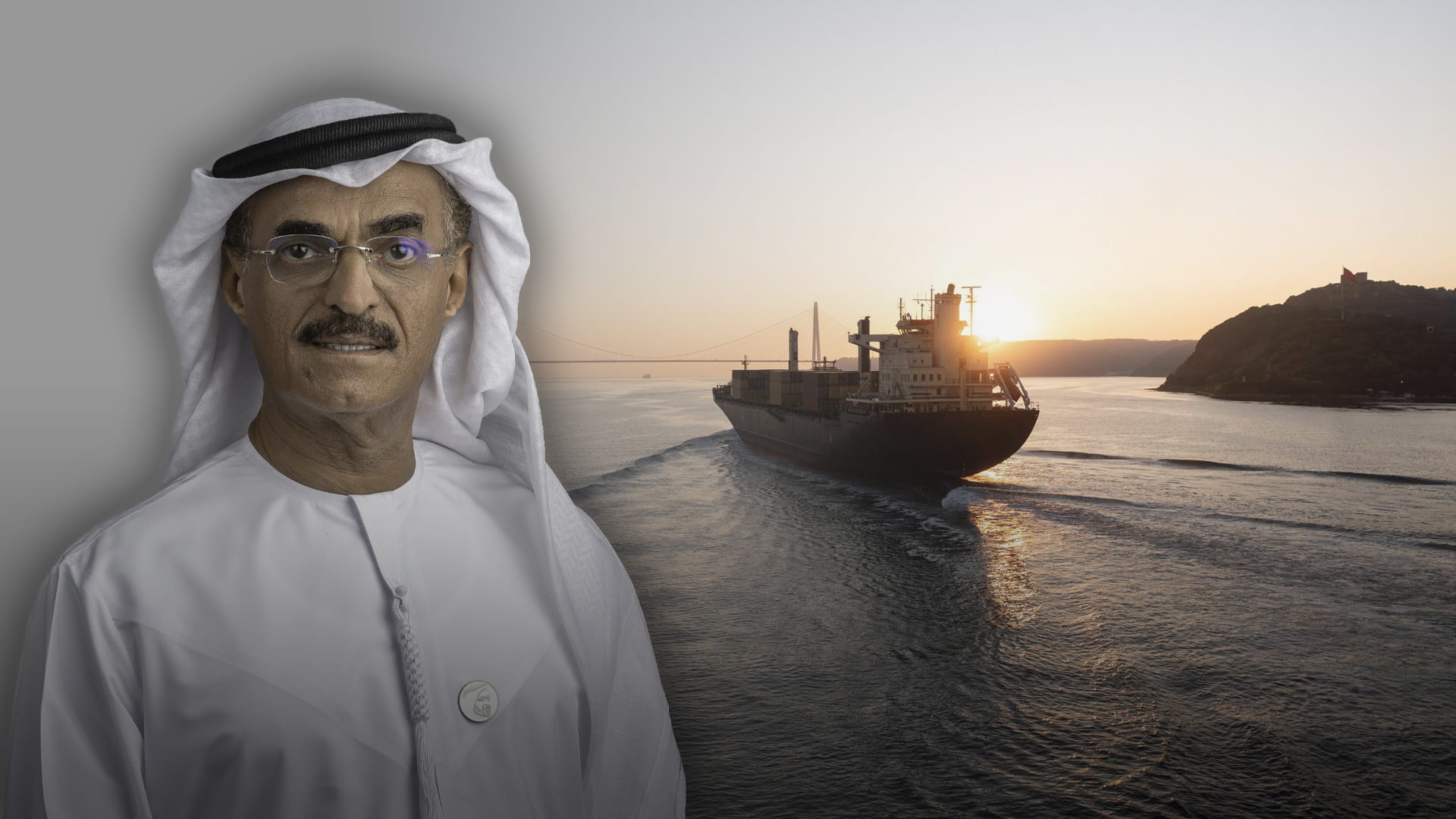
In a world where geography increasingly merges with geopolitics, maritime chokepoints are no longer narrow passages on a map; they have become silent theatres where the interests of major powers intersect and where the tensions of the international system are most visibly reflected. Two straits stand today as emblematic of this transformation: the Strait of Hormuz, the global artery of energy, and the Taiwan Strait, now a central axis of trade and advanced technology in East Asia. Despite the very different political and legal contexts surrounding each, the two crises move in the same shadow — the shadow of intensifying competition over maritime influence and the return of power politics to strategic waterways.
The Strait of Hormuz carries nearly 20 percent of the world’s traded oil — around 20 million barrels per day — in addition to liquefied natural gas shipments that account for roughly a quarter of global LNG trade. Based on recent energy price averages, the value of goods passing through the strait approaches 0.75 trillion dollars annually, making Hormuz one of the most economically sensitive corridors on the planet. Past crises, from the tanker war of the 1980s to the incidents of 2019, have shown how quickly markets react: oil prices can surge within hours, and the international community is forced into a delicate balance between de escalation and deterrence.
Yet despite its volatility, the legal status of Hormuz is relatively clear. Under the United Nations Convention on the Law of the Sea, it is classified as an international strait governed by the regime of “transit passage,” which guarantees freedom of navigation and prevents coastal states from closing it. This clarity has enabled the UN Security Council to intervene in past crises to safeguard shipping, and it continues to provide a framework for international naval cooperation aimed at ensuring the uninterrupted flow of energy.
The Taiwan Strait, by contrast, represents a very different kind of theatre. It is not an energy corridor but a gateway for global trade and technological supply chains. More than half of the world’s container ships transit its waters, and the value of goods crossing it exceeds 3.4 trillion dollars annually. The world’s most advanced semiconductors — over 60 percent of global production — depend on the stability of this narrow passage. Yet its legal status remains contested: China views the strait as part of its internal or historic waters, while the United States and its partners consider it an international waterway. The complexity is compounded by the fact that China is not a party to UNCLOS, limiting the ability of international mechanisms to play a direct role in managing tensions.
This contrast — legal clarity in Hormuz and legal ambiguity in Taiwan — shapes the international community’s capacity to respond. The Security Council has clear tools for addressing threats in Hormuz, but its role in Taiwan is constrained by geopolitical realities, veto dynamics, and the sensitivity of the issue as part of a broader strategic rivalry between two major powers.
Although there is no evidence of a direct causal link between developments in Hormuz and those in Taiwan, several international analyses suggest that the two crises move in the same shadow. China closely observes how the United States manages sensitive maritime corridors, including Hormuz, because such episodes offer a practical demonstration of Washington’s willingness to project naval power in international straits. When the United States becomes deeply engaged in a major Middle Eastern crisis — such as securing the flow of 0.75 trillion dollars’ worth of annual trade through Hormuz — its naval resources and strategic attention are inevitably stretched. This creates windows of opportunity in East Asia, which Beijing may choose to exploit, not as a direct reaction, but as a calculated move during a moment of American distraction.
China also understands that the United States uses maritime chokepoints as instruments of influence, whether in the Gulf or the Western Pacific. Beijing therefore seeks to demonstrate that it can shape realities in its own maritime environment and that it will not accept a precedent in which Washington exercises unilateral control over international straits without a counterbalancing response. This does not imply that China links the two straits explicitly, but it does suggest that Beijing interprets American behavior in Hormuz as part of a broader pattern of maritime power management.
Moreover, any escalation in the Taiwan Strait reverberates through global energy markets, even though the strait itself is not an energy corridor. Disruptions to supply chains raise shipping costs, slow industrial output, and increase energy demand as economies attempt to compensate for logistical bottlenecks. In a period of heightened tension with Iran or instability in Hormuz, an additional shock in Taiwan makes global markets more fragile and amplifies the economic cost of any disruption to Gulf oil and gas flows. In this sense, the two crises interact through global markets even if they are not geographically connected.
At the level of the international system, the contrast between the two theatres is stark. In Hormuz, the global framework for maritime governance remains functional: the legal regime is clear, the regional actors have an interest in stability, and the international community has both the tools and the political will to safeguard the flow of energy. In Taiwan, the absence of legal consensus and the entanglement of the issue with great power rivalry severely limit the role of the UN and leave stability dependent on bilateral deterrence and regional alliances.
Ultimately, the two crises reveal a deeper truth: maritime chokepoints have become mirrors reflecting the structure of the international order. In Hormuz, international law still holds because regional and global actors share an interest in preserving stability. In Taiwan, law gives way to power, and the balance of influence becomes the decisive factor. Yet what unites the two is that they move in the same shadow — the shadow of shifting global power, the resurgence of maritime competition, and the growing fragility of supply chains that link the Gulf to the Western Pacific in a single, interdependent network.
In a world where crises overlap and interests intersect, the future of maritime security will depend on the international community’s ability to strengthen cooperative mechanisms and update the global maritime order to reflect the accelerating geopolitical transformations of our time.